Covers Phuket, Koh Samui, Koh Lanta, Koh Phi Phi, Bali, Palawan, the Maldives, Mauritius, the Seychelles and Zanzibar, with visa and park rules checked at the source.
Updated
This page carries dated prices, schedules or seasonal facts checked on the date above, and that window has now passed. Re-check the sources at the foot of the page before you book.
Thailand's islands sit on two different seas, and that one fact explains most of this ranking. Phuket, Koh Lanta and Koh Phi Phi face the Andaman Sea on the west. Koh Samui sits in the Gulf of Thailand on the east. Each coast has its own rainy season, at a different time of year.
Scored over the whole year, Phuket comes first at 7.1 out of 10 and Samui second at 6.8. Phuket wins on beaches, things to do and price. Samui wins on weather. If you already know your travel month, skip to the month pages linked below: in July or October the order changes.
At a glance
Best overall
Phuket, 7.1/10: the most beaches, day trips and hotels, 4-star rooms from $32
Best for May to October
Koh Samui, on the Gulf coast, out of the worst of the southwest monsoon
Best quiet, cheap beach
Koh Lanta: long west-coast sand, 3-star rooms from $8 in July
Do not stay a week
Koh Phi Phi: $187 for a 4-star night in January, two or three days of things to do
Getting there
No US nonstops to any Thai island; plan one or two connections
Entry for US citizens
Passport, 30-day visa-free stay since September 15, 2026, free Digital Arrival Card
The ranking
Score = the weighted average of six factors. How we score
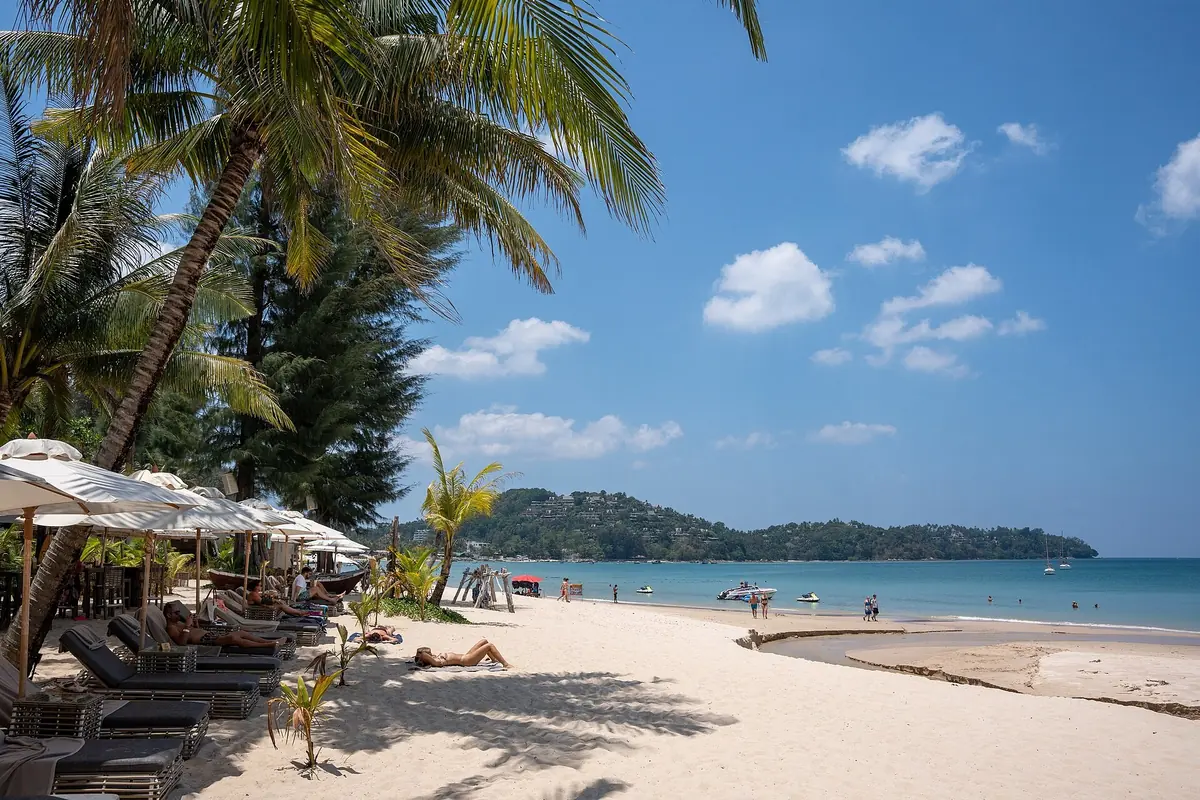
Phuket is first because it is the most complete: an 8 for beaches, 8.5 for things to do and a perfect 10 for value, with a well-reviewed 4-star in Patong at $76 in January and $32 in July. Kata and Karon suit families; Phang Nga Bay and Phi Phi are easy boat days. The catches are crowds (its 1.0 crowd score ties for the site's lowest) and the southwest monsoon, which roughs up the west-coast beaches from about mid-May to mid-October. Go between November and April.
Samui has the best weather of the four, a 9.0 over the year, because it sits on the Gulf coast and misses most of the Andaman monsoon. It loses first place on things to do (7 against Phuket's 8.5) and on price: the cheapest well-reviewed 4-star in Chaweng was $84 in January and $58 in July. It suits couples and families who want pool villas and calm sand at Chaweng or Choeng Mon. Avoid mid-October to early December, its wettest stretch.
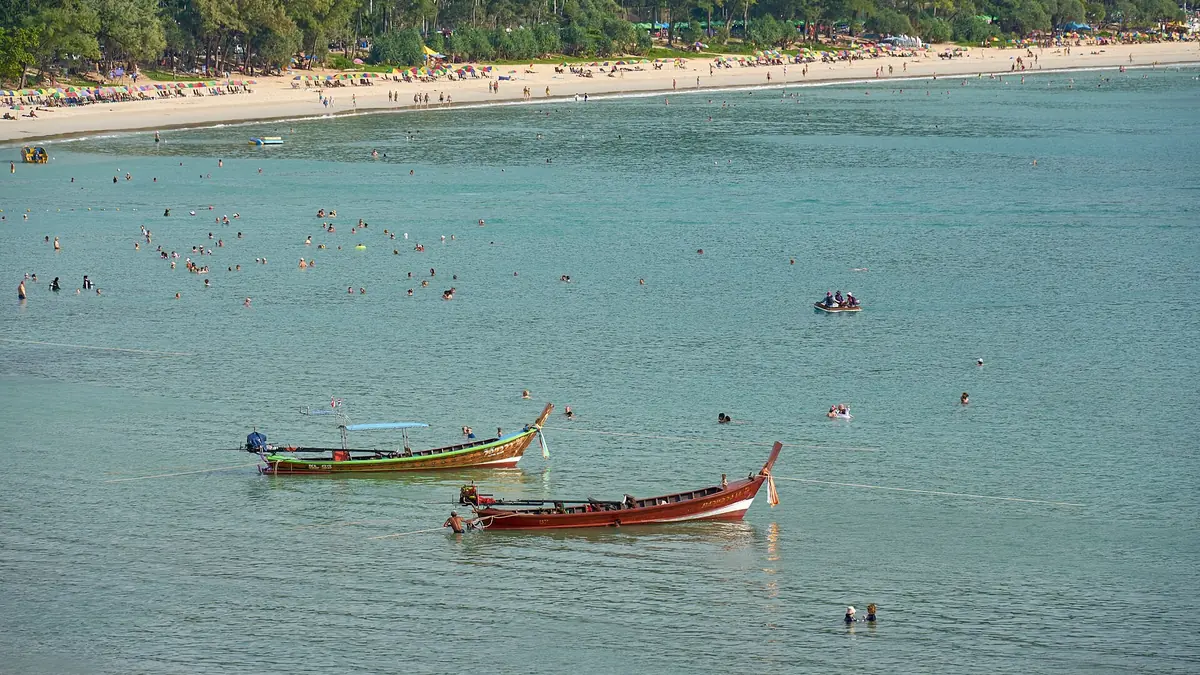
Lanta ties Phuket and Samui on beaches with an 8: Klong Dao, Long Beach and Klong Khong are long, quiet and sandy. It drops to third on things to do (5.5) and because its own page rates it worth it only from November to April, which costs 0.4 points. It is the pick for young kids and budgets, with 3-star rooms from $8 in July and 4-star resorts at $84 and $52. There is no airport: fly to Krabi and ride about 24 miles by road and car ferry.
Phi Phi has the most dramatic scenery here but ranks last on two numbers: things to do (5) and value (6.8), with the cheapest well-reviewed 4-star at $187 in January. Maya Bay costs foreign adults $12 (400 baht), limits swimming to a marked zone and closes from August 1 to September 30. It suits solo travelers and teens for a night or two, with no cars and plenty of group boat trips. Families should stay on Lanta or in Phuket and come on a day trip.
Every island on the site gets the same six scores. Weather, getting there, value and crowds come from data; beaches and things to do are our editors' scores, with the reason written on each island page. Beaches and things to do carry 25% each, weather 20%, and access, value and room to breathe 10% each. An island whose own page says it suits only some travelers loses 0.4 points. The full method is in how we score islands.
Two things are special about Thailand. First, all four islands score 2 out of 10 for access: none has a US nonstop, and all sit about 8,500 to 9,400 miles (13,700 to 15,100 km) from New York, Chicago, Dallas and Los Angeles. So access never separates them. Second, Thailand publishes visitor counts for Phuket and Samui but only a province total for Krabi, which covers both Lanta and Phi Phi. Those two have no crowd score, and their totals are averaged over the other five factors.
Two coasts, two monsoons: why the winner changes by month
The Andaman coast (Phuket, Phi Phi, Lanta) gets the southwest monsoon. The Thai Meteorological Department, as summarized in Wikipedia's Climate of Thailand, dates its arrival to about mid-May, with rainfall on the southern west coast peaking in September. Island pages and boat operators treat roughly mid-May to mid-October as the rough season: red flags on the west-facing beaches and cancelled boat trips.
The Gulf coast (Samui) is sheltered from most of that. Its wet spell comes with the northeast monsoon, heaviest from about mid-October to early December, with the southern east coast's rainfall peak running November to January.
In our dataset, Samui has the better weather score in every month from February to October, and Phuket wins November, December and January. Phuket leads by half a point on everything except weather, so it still tops February, when Samui's weather lead is only 0.2. From March to October, Samui's lead is big enough to take first place. See our month pages for January, April, July and December.
Which island for which trip
First trip to Thailand, November to April: Phuket. The most flights, hotels and boat trips, and Phi Phi is a day trip away.
Any trip from May to October: Samui over Phuket. You pay a little more for rooms ($58 against $32 for a 4-star in July) and get calmer, drier east-coast beaches.
Young children or a tight budget: Koh Lanta, from November to April. Klong Dao and Long Beach shelve gently and traffic is light.
Solo travelers and teens: one or two nights on Phi Phi, then move on. There are no cars on Phi Phi Don and joining a group boat trip takes no planning.
Many trips combine two. Phuket to Phi Phi is about 1 to 2 hours by ferry or speedboat from Rassada Pier, and dry-season ferries link Phi Phi and Lanta. Samui is on the other coast, so pairing it with an Andaman island means a flight or a long transfer.
Getting there and entry rules for Americans
No US airport flies nonstop to Phuket, Samui or Krabi, the airport for Lanta. Phuket's routes include Bangkok, Singapore, Doha, Dubai, Istanbul, Seoul, Hong Kong and Taipei. Samui's airport is owned by Bangkok Airways, and Scoot flies in from Singapore. For Lanta, fly to Krabi, then ride about 24 miles (38 km) by road and car ferry; shared vans were listed at $11 to $13 a seat.
Entry got stricter this fall. Since September 15, 2026, US citizens get a 30-day visa-free stay, down from 60, according to the Tourism Authority of Thailand; you can apply in Thailand for up to 30 more days. Your passport needs 6 months of validity, and every traveler must file the free Thailand Digital Arrival Card within 72 hours before landing. A tourist entry fee of $13 (450 baht) has been proposed but was not being collected on October 20, 2026. Our passport rules guide has the rest.
What a night costs on each island
These are the cheapest well-reviewed hotels rated 4 stars or better on Kayak, taxes and fees in, checked October 20, 2026. We used the 4-star rule for every Asian island because plain 3-star floors here drop below $20.
Island (area priced)
January 13, 2027
July 14, 2027
Phuket (Patong)
$76
$32
Koh Samui (Chaweng)
$84
$58
Koh Lanta (west-coast beaches)
$84
$52
Koh Phi Phi (Tonsai and Loh Dalum)
$187
$86
Rooms are the cheap part. The flight is the expensive part, and Phi Phi tours that land at Maya Bay add a park fee of $12 (400 baht) per foreign adult if it is not included. For more low-cost options, see our cheap islands ranking.
Honest caveats
Phuket's crowd score is the lowest on the site: Thailand's Ministry of Tourism counted 13.0 million overnight tourists there in 2025, Thai and foreign. Samui counted 3.3 million on a much smaller island. Neither is quiet in high season.
Maya Bay on Phi Phi Le closes every year from August 1 to September 30 and can shut for a day or two in rough weather. In the wet months on either coast, expect boat trips to be cancelled at short notice, and treat red flags on west-coast beaches as orders. For the wider region, compare Bali and Palawan in our Asia ranking.
Booking through these links supports this site at no cost to you. Prices move by date, so we do not print them here; the official prices we checked are in the page above.
Frequently asked questions
What is the best Thai island for first-timers?
Phuket, if you travel between November and April. It has the most flights, hotels and day trips, including boats to Phi Phi and Phang Nga Bay, and well-reviewed 4-star rooms in Patong cost $76 on January 13, 2027.
Is Phuket or Koh Samui better?
It depends on the month. Over the whole year Phuket scores 7.1 and Samui 6.8, because Phuket has more to do and cheaper rooms. But Samui has the better weather score from February to October in our data, and it ranks first for April, July and October.
Which Thai island is best in July and August?
Koh Samui. It sits on the Gulf coast, out of the worst of the southwest monsoon that brings rough seas to Phuket, Phi Phi and Lanta from about mid-May to mid-October.
Do US citizens need a visa for Thailand?
Not for tourist stays up to 30 days. Thailand cut the visa-free stay for US passports from 60 to 30 days on September 15, 2026. You can request up to 30 more days in Thailand, and you must file the free Thailand Digital Arrival Card within 72 hours before arrival.
Which Thai island is best for families with young kids?
Koh Lanta from November to April. Klong Dao and Long Beach slope gently into calm water in the dry season, traffic is light and family bungalows are cheap. Skip it from May to October, when the surf builds on the west coast.
Is it worth staying on Koh Phi Phi?
For one or two nights, yes: you see the bays before the day boats arrive. For longer, no. It has the priciest rooms of the four, $187 for a 4-star night in January, and about two or three days of things to do.

 1