Covers 18 European islands, from Crete and the Cyclades to Sicily, Sardinia, Mallorca, the Canaries, Madeira and the Azores, with euro prices converted to dollars on a dated rate.
Updated
This page carries dated prices, schedules or seasonal facts checked on the date above, and that window has now passed. Re-check the sources at the foot of the page before you book.
The Canaries are an easy family trip once you get there. Distances are short, roads are good, the big resorts have pools, and the south-coast beaches of the three busiest islands include sheltered, gently shelving bays. The hard part is the journey: there is no US nonstop to any of the islands, so plan on one connection in Europe.
This ranking starts from each island's overall score and adds points where our island page says it suits families with mixed ages. Three of the four qualify, and they finish within 0.4 points of each other. Tenerife leads because it has the most to do for every age and some of the cheapest rooms we found. Below the cards: which island fits which ages, which beaches are safe for small children, and what a family week costs.
At a glance
Best for families
Tenerife: calm Los Cristianos beach, the Teide cable car, whale boats and two big family parks
Best with toddlers
Lanzarote or Gran Canaria, for the sheltered built coves at Playa Blanca, Amadores and Anfi del Mar
Best with teens
Tenerife for the most to do, or Fuerteventura for surf and kite lessons
Cheapest family base
Fuerteventura or Tenerife: doubles from $93 and $92 in July
Beaches to avoid with kids
Benijo, Famara and Cofete: strong currents and surf
The ranking
Score = the island's overall score, with islands that suit this kind of trip ranked first. How we score
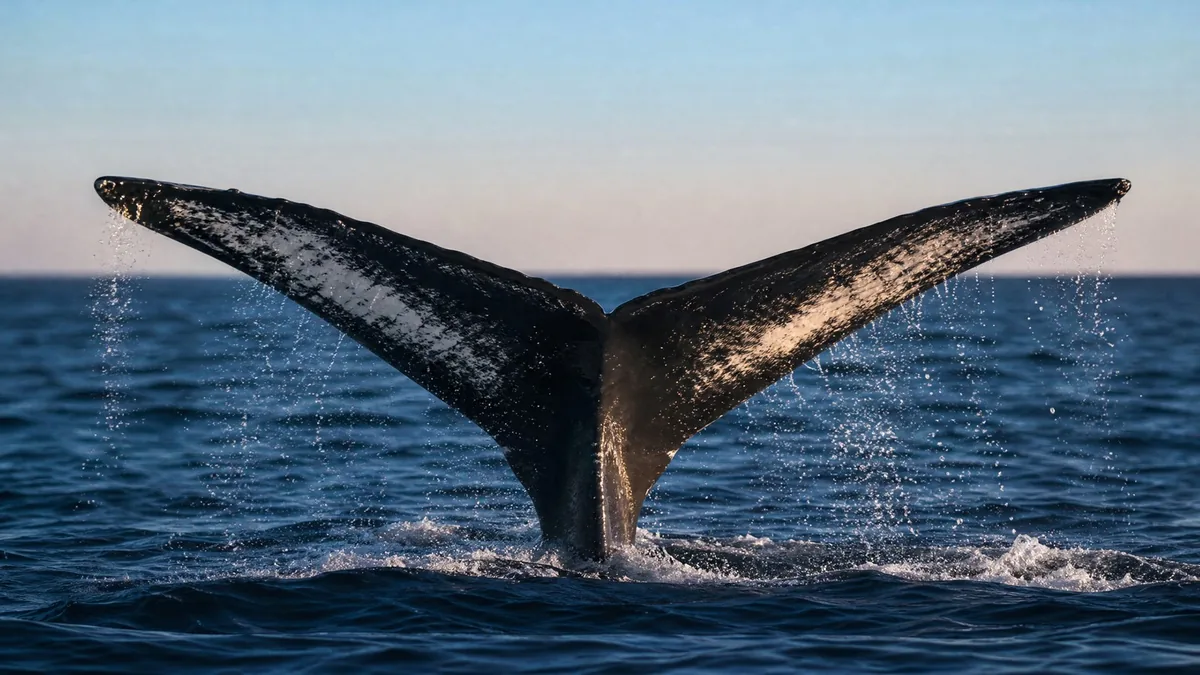
Tenerife scores 9 for things to do, the highest in the Canaries, and that is what a family week needs. The Teide cable car (from $48 return for adults) climbs to 11,663 feet (3,555 m), whale and dolphin boats leave from the southern marinas, and Siam Park and Loro Parque fill the days when the sea feels cool. Playa de Los Cristianos is sheltered and gently shelving, the easiest swim on the island for young children. Rooms were cheap on our dates: $124 in January and $92 in July. The weak spot is the sand itself, which scores 6: most southern beaches sit behind breakwaters.
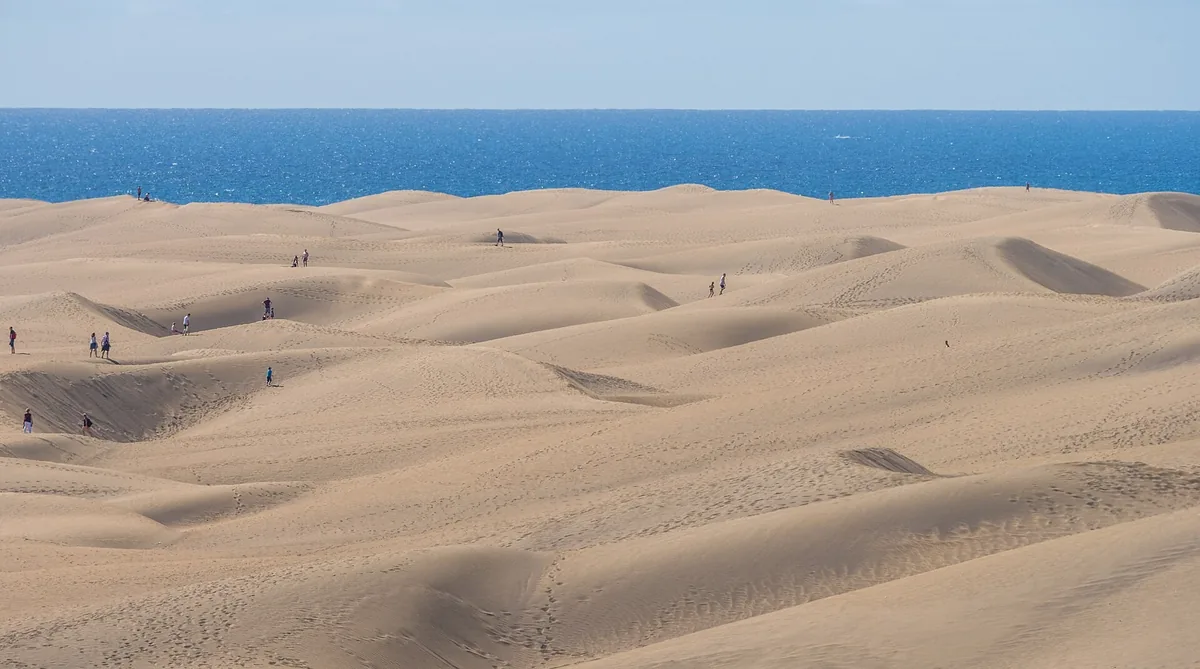
Gran Canaria trails Tenerife by a tenth of a point. It has better beaches (7 against 6) and fewer big attractions (8 against 9 for things to do). For young children, the built coves at Amadores and Anfi del Mar are the calmest water on the island, and Las Canteras in Las Palmas is sheltered by an offshore rock bar, good for snorkeling at low tide. The long beach at Maspalomas and Playa del Inglés has room to run but can have waves and wind. Hotels cost more than Tenerife's: $161 in January and $139 in July in Playa del Inglés.
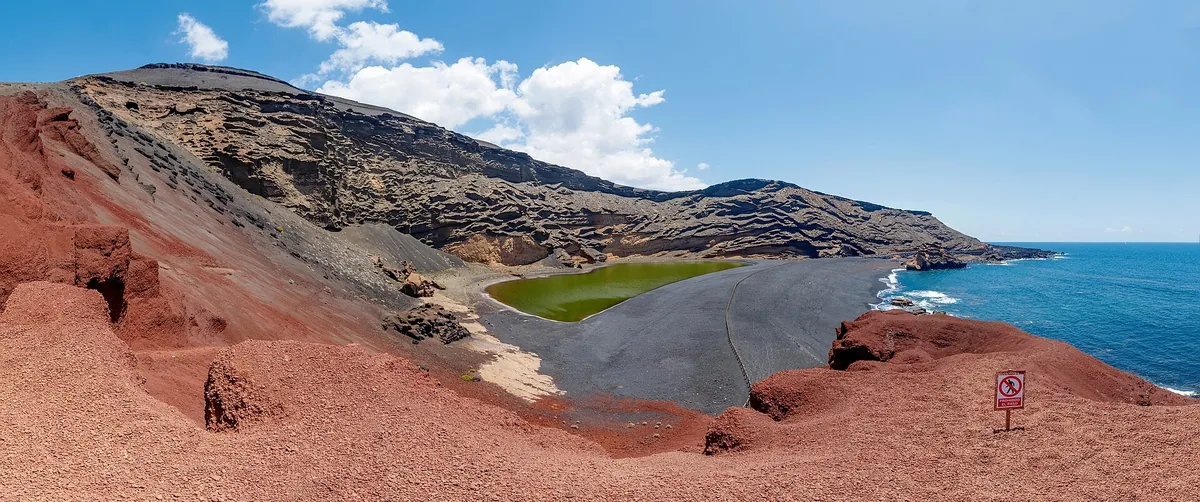
Lanzarote suits families with young children best. Playa Dorada and Playa Flamingo in Playa Blanca are man-made and sheltered, Playa Grande in Puerto del Carmen is gentle most days, and drives across the compact island are short. Timanfaya National Park costs $34 (€30) per adult, children up to 6 free, and the visit takes about 90 minutes, a good length for small kids. It ranks third because teens have less to do here than on Tenerife, and hotels cost the most of the four: $169 in January and $151 in July in Puerto del Carmen.
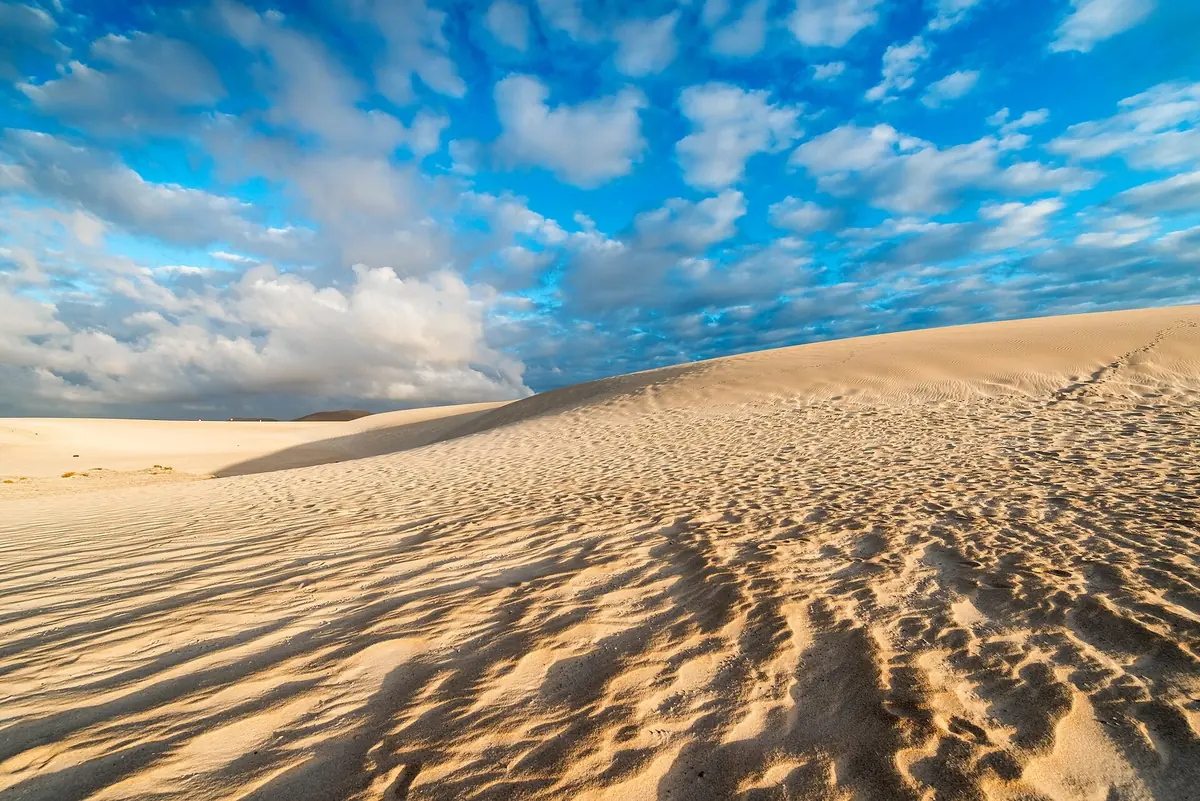
Fuerteventura is the only one of the four that our island page does not tag for mixed-age families, which is why it sits 1.8 points behind. It is tagged for teens instead: kite, windsurf and surf lessons at Corralejo, El Cotillo and Sotavento can fill a week on the water. Younger children do best at the El Cotillo lagoons, shallow and sheltered at low tide, or the calm bay at Caleta de Fuste. Avoid Cofete and watch the currents at Corralejo. Rooms were cheapest here, $107 in January and $93 in July, but things to do score only 5.5.
Each island starts from its overall score, built from six factors: weather, beaches, things to do, getting there from the US, value and room to breathe. Islands that our island page tags for families, meaning mixed ages, groups, villas and easy driving, get 1.5 extra points. The tag is an editorial call, with the reason written on the island page. The full method is in how we score islands.
Tenerife, Gran Canaria and Lanzarote all carry the family tag, so their order is the same as in our main Canary Islands ranking. Fuerteventura is tagged for teens and budget travelers instead. Its island page notes that families can do well in Corralejo or El Cotillo, but beyond the beach and the water sports there is little to do.
Which island for which ages
Toddlers and under-6s: Lanzarote or Gran Canaria. Both have built, sheltered coves next to big resort hotels: Playa Dorada and Playa Flamingo in Playa Blanca on Lanzarote, Amadores and Anfi del Mar on Gran Canaria. Lanzarote's short drives and free Timanfaya entry for children up to 6 help too.
Ages 6 to 12: Tenerife. A volcano by cable car, whale-watching boats and two big family parks give you a different day each day. Los Cristianos and Playa del Duque are calm for swimming.
Teens: Tenerife again for range: Teide hikes, Siam Park, boat trips and surf at Playa de las Américas. For a water-sports week, Fuerteventura, where kite and surf schools line Corralejo, El Cotillo and Sotavento.
Mixed ages in a villa: Gran Canaria or Tenerife, where a rental car puts the mountains, a city and several beaches within a day's drive.
The Canary Islands face the open Atlantic, so the calm beaches are mostly man-made or naturally sheltered. These are the easy ones for children, from the island pages:
Tenerife: Playa de Los Cristianos and Playa del Duque in Costa Adeje.
Gran Canaria: Amadores, Anfi del Mar, Puerto de Mogán and Las Canteras at low tide.
Lanzarote: Playa Dorada, Playa Flamingo and Playa Grande.
Fuerteventura: the El Cotillo lagoons and Caleta de Fuste.
Skip these for swimming with kids: Benijo in Tenerife's Anaga hills and Famara on Lanzarote, both with strong currents; Cofete on Fuerteventura, remote with heavy surf; and Güigüí on Gran Canaria, reached on foot or by boat with no services. Playa Jardín in Puerto de la Cruz has real Atlantic waves, so watch the flags.
When to go with children
For swimming in the sea, go in summer or early fall. In our climate data the sea peaks from August to October, at 77°F (25°C) off Tenerife and 75°F (24°C) off Gran Canaria, and every island scores its best weather from July to October. That lines up with US summer vacation.
Winter works too, but differently. Days are mild, with highs around 70°F, and the sea is at its coolest, so families spend more time in heated hotel pools. It is also the islands' high season and the dearest time for rooms. See our Canary Islands for winter sun page. The islands sit outside the usual Atlantic hurricane tracks, though the remnants of Hermine brought record rain in September 2022, according to the National Hurricane Center.
What a family trip costs, and getting there
Our hotel prices are for a double room for 2 adults, taxes in: Tenerife $124 in January and $92 in July, Gran Canaria $161 and $139, Lanzarote $169 and $151, Fuerteventura $107 and $93. A family room or apartment will cost more, and we did not price them. The posted prices we could confirm: the Teide cable car from $48 return per adult, Timanfaya $34 (€30) per adult with children up to 6 free. We could not load official prices for Siam Park or Loro Parque, so check them before you budget. We found no regional tourist tax in the Canaries as of October 20, 2026.
There is no US nonstop. Plan one connection through Madrid, Barcelona, Lisbon or another European hub; United's Newark-Tenerife route ended in May 2025. Every traveler, including babies, needs a US passport valid at least 3 months beyond departure. The EU's Entry/Exit System has taken fingerprints and photos at the border since April 10, 2026, and ETIAS is not yet in operation. Our passport rules guide has the details. Rent a car if you want more than one beach.
Booking through these links supports this site at no cost to you. Prices move by date, so we do not print them here; the official prices we checked are in the page above.
Frequently asked questions
Which Canary Island is best for toddlers?
Lanzarote or Gran Canaria. Both have sheltered, man-made coves next to resort hotels, such as Playa Dorada and Playa Flamingo on Lanzarote and Amadores and Anfi del Mar on Gran Canaria, and short drives. On Tenerife, Playa de Los Cristianos is the calm choice.
Which Canary Island is best for teenagers?
Tenerife, for the most to do: a cable car up Mount Teide, whale-watching boats, Siam Park and surf at Playa de las Américas. If your teens want a week of kite or surf lessons, Fuerteventura is the specialist.
Is Tenerife or Gran Canaria better for families?
They are a tenth of a point apart in our ranking. Tenerife has more to do and its hotels were cheaper on our dates. Gran Canaria has better sand and calmer built coves for small children. Pick Tenerife for school-age kids and teens, Gran Canaria for a beach-centered week.
Is Lanzarote good for kids?
Yes, especially young ones. The beaches at Playa Blanca and Puerto del Carmen are sheltered, the island is compact, and Timanfaya National Park is free for children up to 6. Teens may find it quieter than Tenerife.
Is Fuerteventura good for families?
For active teens, yes; for a mixed-age week, less so. The El Cotillo lagoons and Caleta de Fuste are calm for small children, but many beaches are windy, and beyond the sand and water sports there is little to do. It had the cheapest rooms of the four.

 1