Covers 25 islands from Puerto Rico and the Virgin Islands to Aruba, the Bahamas, Bermuda, Cozumel and Roatán, with prices, flights and entry rules checked at the source.
Updated
This page carries dated prices, schedules or seasonal facts checked on the date above, and that window has now passed. Re-check the sources at the foot of the page before you book.
June 1 is the official start of the Atlantic hurricane season, and that date scares more travelers than the record justifies. The NOAA National Hurricane Center says the first hurricane of a typical season forms in early to mid-August, and that most activity comes between mid-August and mid-October. June is early in the season, not the dangerous part of it.
Our scores still take a small deduction for storm risk from June, and a smaller one for the five islands that sit south of the usual track. What moves the ranking more this month is rain. The Windward Islands enter their wet season, and three of them fall out of the top eight. Curaçao leads for the second month running, with Puerto Rico and Jamaica close behind.
At a glance
Best overall
Curaçao: about 1.7 inches of rain and a low storm risk south of the main track
Driest
Aruba, about 1.1 inches, new to the list at fourth
Best no-passport pick
Puerto Rico, second
Dropped out
Martinique, St. Lucia and Grenada, as June rain passes 4 inches
Storm season
June 1 to November 30; most activity mid-August to mid-October (NOAA)
The ranking
Score = 55% this month's weather + 45% the island's other five factors. How we score
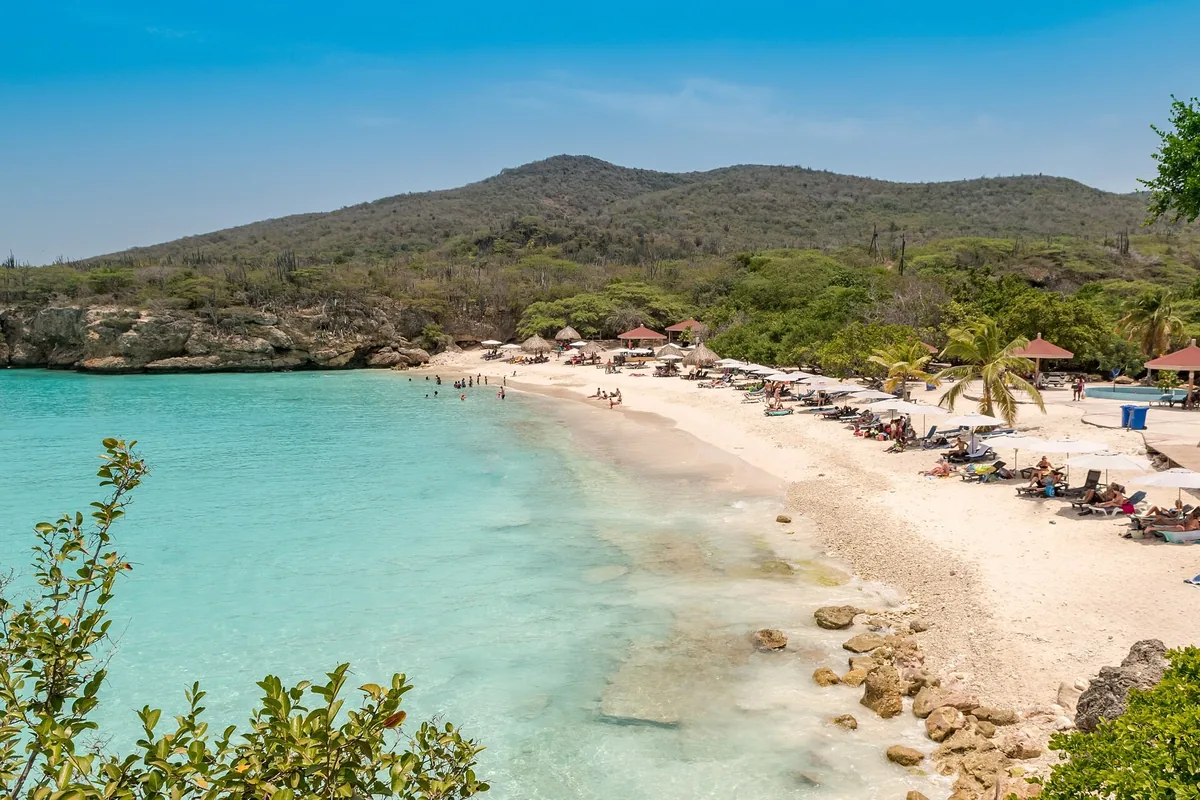
Curaçao leads June with about 1.7 inches of rain, 87°F (31°C) days and an 83°F (28°C) sea. Because it sits south of the main storm track, its June storm deduction is half the usual: NOAA's records since 1950 show one hurricane, Felix in 2007, passing within 50 nautical miles. Its value score is near perfect, with $62 Willemstad rooms in July. Families should base at Jan Thiel for calm man-made beaches; snorkelers at Westpunt. Rent a car either way.
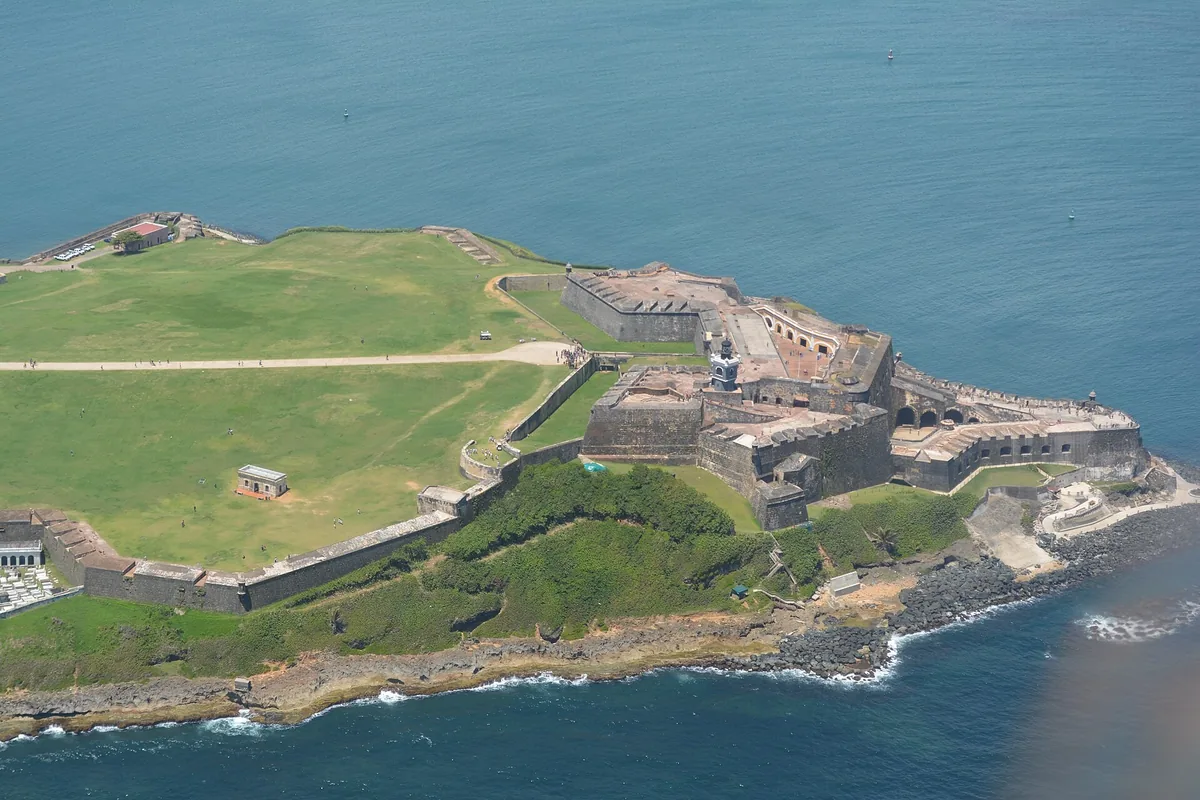
Puerto Rico is second, its best ranking of the year. June rain is about 2.6 inches, wetter than the ABC islands but drier than its May, with 87°F days and an 84°F sea. Its year-round score is the highest on this page: things to do score 9 and San Juan has nonstops from 41 US airports. It takes the full June storm deduction, since it lies in the main path. No passport is needed, which makes it the simplest family choice once school is out. San Juan rooms were $114 in July.
Jamaica is third, its May rains easing to about 2.6 inches in June, with 87°F days and an 85°F sea. Its cheap rooms, $53 in our July check, and 24 US nonstop airports keep its year-round score high, despite the conditional verdict on our page. Seven big Montego Bay resorts were listed for a 2027 reopening with no month given, so check the Tourist Board's list before you book one. Negril's Seven Mile Beach is usually calm, with shallow water for children.
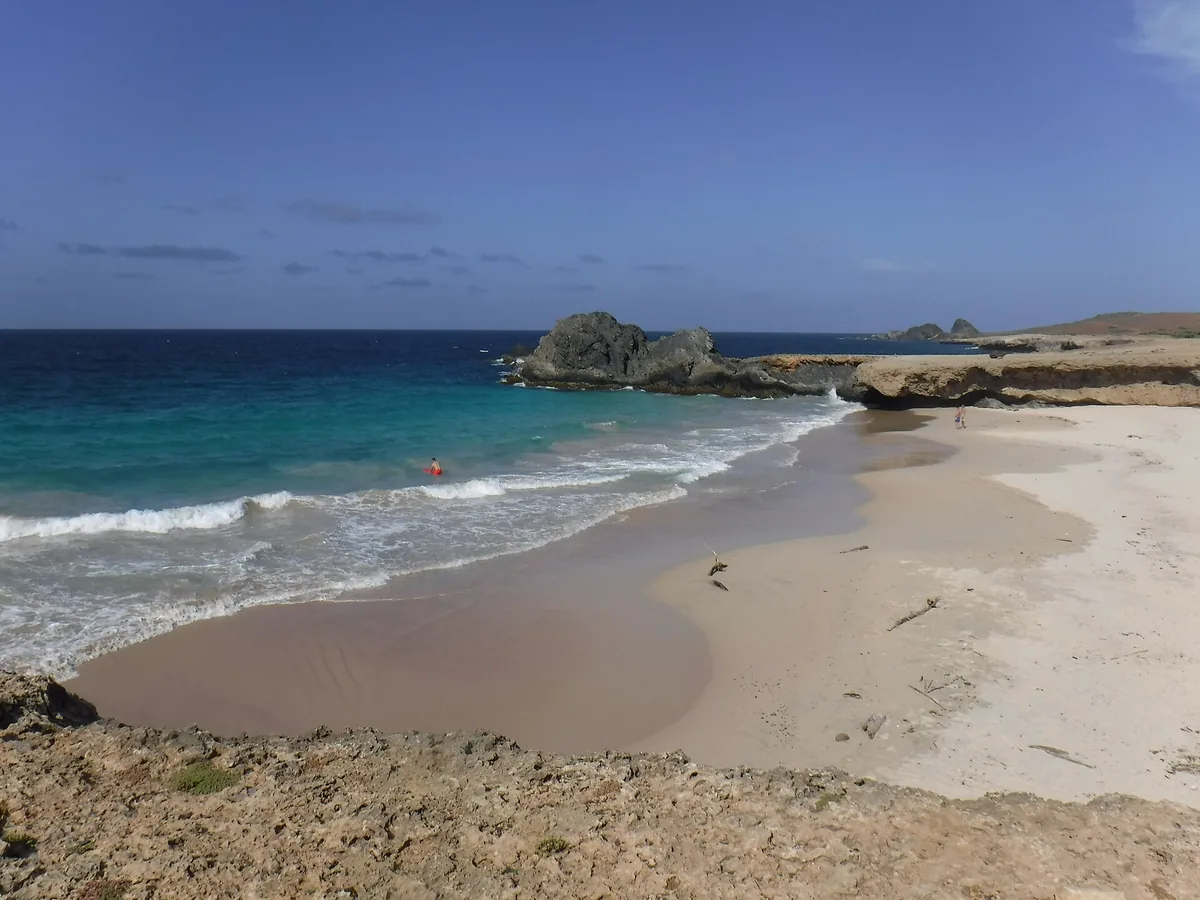
Aruba joins the list in June with the driest weather on this page, about 1.1 inches, and a half-size storm deduction: only two hurricanes have passed within 50 nautical miles since 1950. Its beaches score 9, with calm water at Palm Beach and toddler-friendly Baby Beach. It has been held back all year by price and crowding, and still is: the cheapest Noord room was $173 in July, and 1.5 million stay-over visitors share 69 square miles. Add the $20 Sustainability Fee per person aged 8 and up.
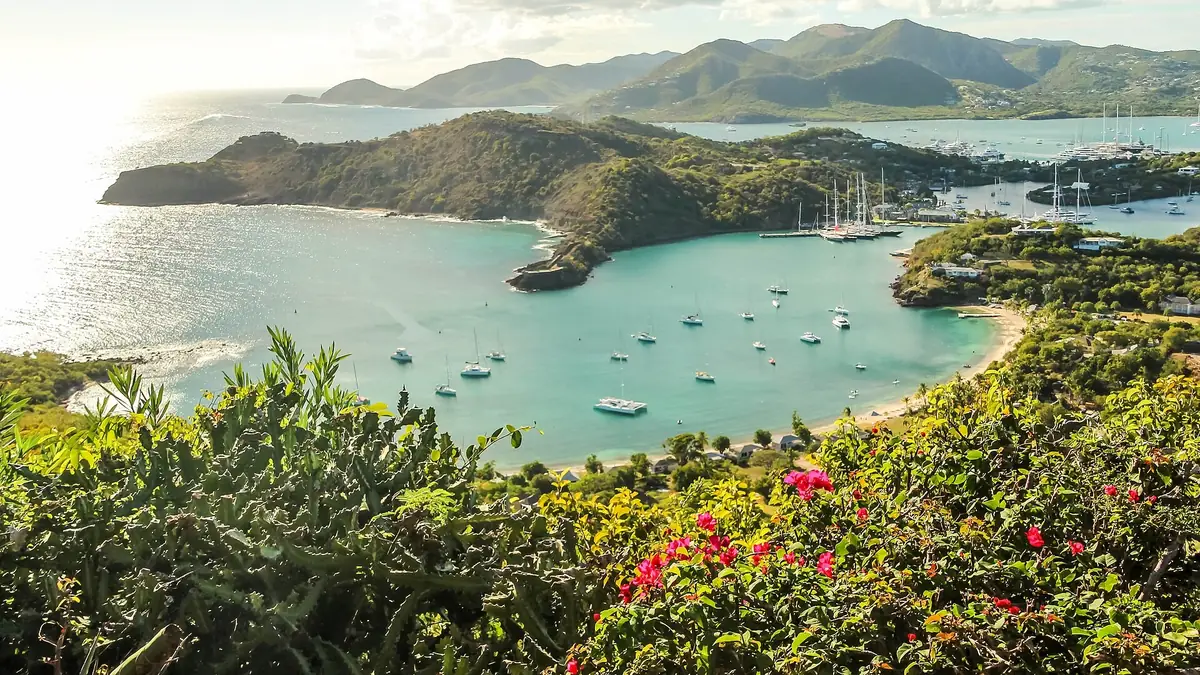
Antigua ties Aruba at fifth, with 86°F days, an 84°F sea and about 2.4 inches of rain. Its beaches, 9 out of 10, are the joint best here, and June is still the warm-sea shoulder before the summer heat. It takes the full storm deduction. The awkward number is price: its cheapest town room in July was $155, above January's $99, and beach-strip rooms were $178. Note the Barbuda ferry now costs $120 (EC$325) round trip, and is cancelled in bad weather.
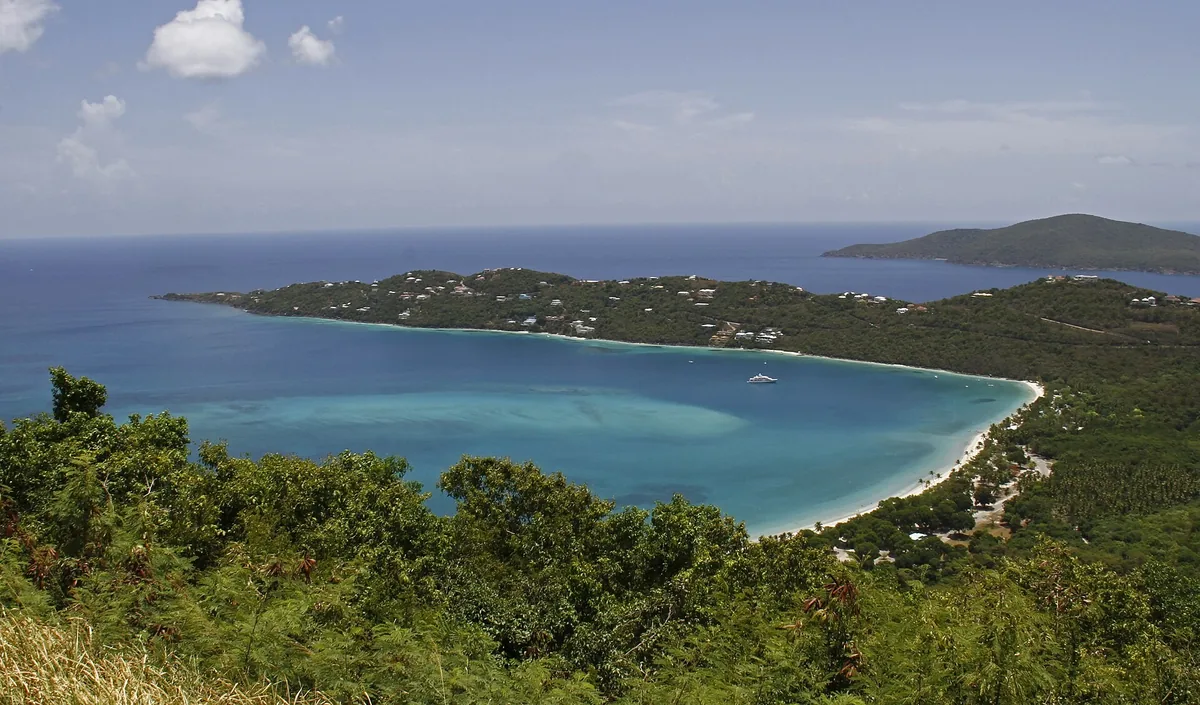
St. Thomas is sixth, with the mildest days here, 83°F, an 84°F sea and about 2.2 inches of rain. It is the second no-passport island on this list, with 16 US nonstop airports and $93 rooms in Charlotte Amalie on both of our dates. Things to do score 6.5, so most visitors spend days on St. John, a 15-minute ferry away. Magens Bay is the calm family beach. Leaving for the mainland, you clear customs and USDA inspection, so carry a passport or birth certificate and photo ID.
St. Martin is seventh. June is one of its driest months, about 1.5 inches, with 82°F days and an 84°F sea. Its beaches and things to do both score 8: Mullet Bay and Pinel Island for calm water, Grand Case for dinner, and ferries to Anguilla. It is pulled down by the lowest crowd score in our Caribbean data, because the Dutch side handles around 1.6 million cruise passengers a year. Summer is quieter: the first quarter carried nearly 30% of the airport's 2025 traffic. Simpson Bay rooms were $111 in July.
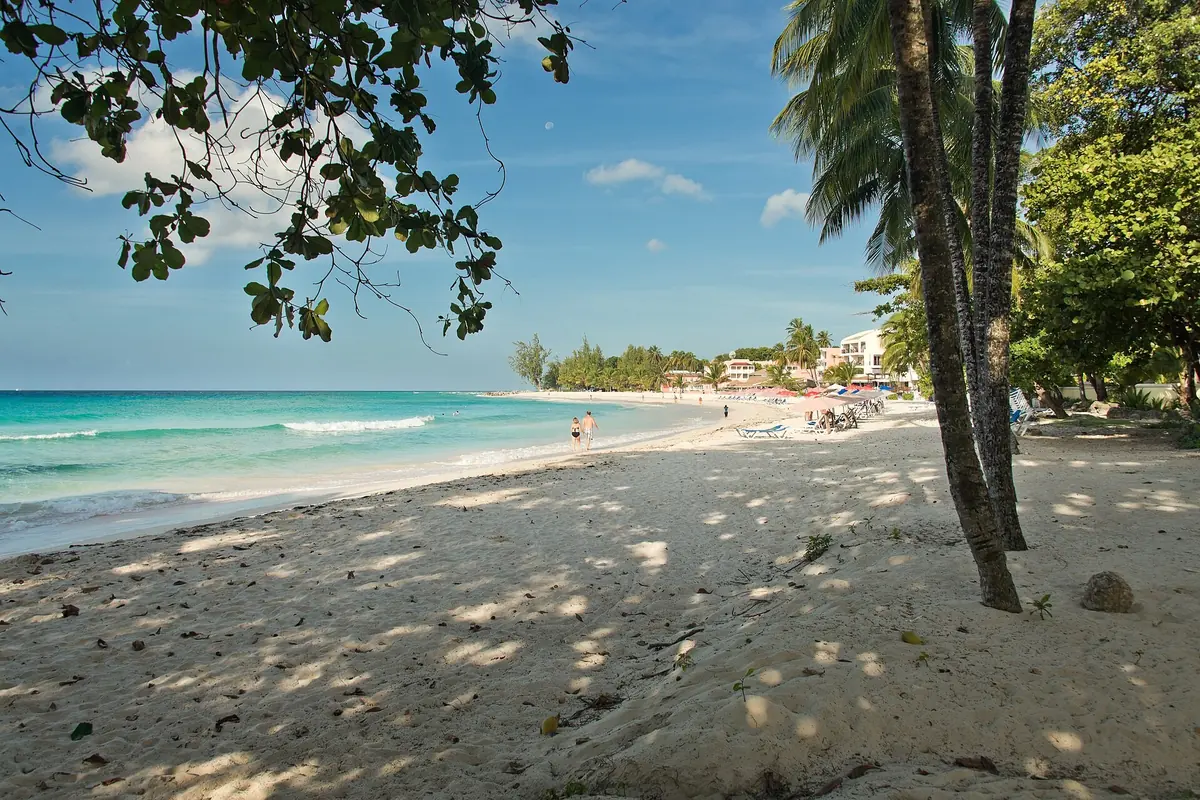
Barbados is eighth. June is the start of its wetter half, about 3.9 inches, which drops its weather score to 8.9, though it keeps the reduced storm deduction for islands east of the main chain. Its summer price drop is the biggest in this list: $92 on the south coast in July against $140 in January. West-coast beaches such as Mullins Bay stay calm. Watch for sargassum on the south and east coasts in some summers, and pick a west-coast base if the outlook is heavy.
Each score is 55% June weather and 45% the island's year-round profile: beaches and things to do from our editors, plus access, hotel value and crowding from data. From June to November, the weather part subtracts a storm-season penalty. In June it is small: 0.6 points out of 10, halved to 0.3 for Aruba, Bonaire, Curaçao, Barbados and Grenada, which lie further south. In August and September it is several times larger. The full method is in how we score islands.
How risky is June, really?
Lower than any month from August to October. NOAA's 1991–2020 averages give a typical Atlantic season 14 named storms, 7 hurricanes and 3 major hurricanes, and its climatology puts the first hurricane of an average year in early to mid-August.
Low is not zero. Hurricane Beryl made landfall on Carriacou, part of Grenada, as a Category 4 storm on July 1, 2024, and damaged or destroyed nearly every building there. That was an unusually early and strong storm, but it shows why even southern islands carry some risk. Book refundable rates or buy travel insurance that covers named storms if you travel from June on. Our hurricane and cyclone seasons guide explains what to look for in a policy.
Why Martinique, St. Lucia and Grenada fall out
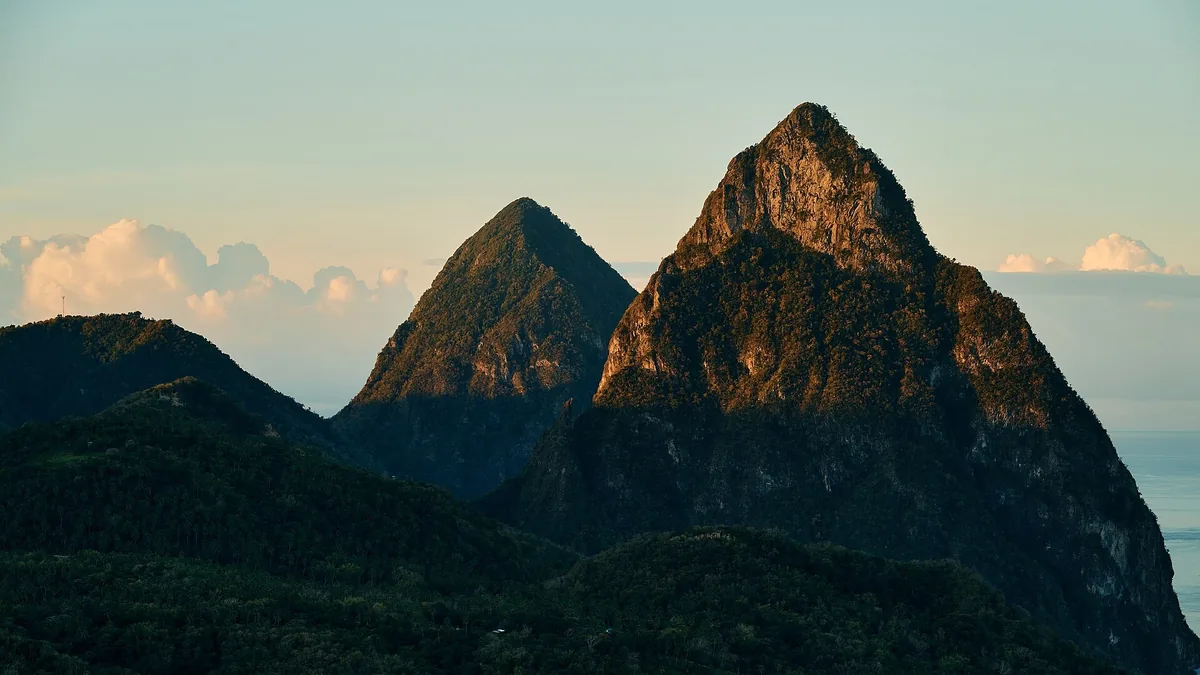
The volcanic, mountainous islands of the Eastern Caribbean catch the most rain once the wet season begins. In our dataset, June rain is about 4.1 inches on Martinique, 4.5 on St. Lucia and 4.3 on Grenada, against 1.1 to 2.6 inches on every island in the top eight except Barbados, at 3.9. Martinique finishes 11th, 0.66 behind the leader. If you love those islands, they are still green and warm in June; plan hikes for mornings and expect cloud on the peaks.
The flat, dry islands gain. Aruba joins at fourth with about 1.1 inches, and St. Thomas and St. Martin, in the drier northeast, both make the list.
Summer prices from our July checks
We priced the cheapest 3-star-or-better double, taxes in, for Wednesday, July 14, 2027. June is not in our data, but the July figures show the summer pattern:
Island
January 13, 2027
July 14, 2027
Jamaica (Montego Bay)
$53
$53
Curaçao (Willemstad)
$62
$62
Barbados (south coast)
$140
$92
St. Thomas (Charlotte Amalie)
$93
$93
St. Martin (Simpson Bay)
$134
$111
Puerto Rico (San Juan)
$120
$114
Antigua (St. John's)
$99
$155
Aruba (Eagle and Palm Beach)
$203
$173
The biggest summer saving among these is Barbados, about a third off. The budget islands, Jamaica and Curaçao, were already at their floor in January. Antigua's town hotels were dearer in July, so do not assume summer is always cheaper.
June for families on school holidays
Once US schools close, the family-friendly calm-water islands matter most. Aruba's Palm Beach and Baby Beach, St. Thomas's Magens Bay and Puerto Rico's Isla Verde and Luquillo are shallow and sheltered. Puerto Rico and St. Thomas also spare you passports for the children, though adults need a REAL ID or a passport to fly. Our best Caribbean island for families ranks the options year-round.
Booking through these links supports this site at no cost to you. Prices move by date, so we do not print them here; the official prices we checked are in the page above.
Frequently asked questions
Is June a good time to go to the Caribbean?
Yes, on the right island. It is hot, quieter than winter and early in the hurricane season, when NOAA's climatology shows little activity. Pick a dry island such as Curaçao, Aruba or St. Martin rather than the rainier mountainous islands.
Is June hurricane season in the Caribbean?
Yes. The Atlantic hurricane season runs June 1 to November 30, per NOAA's National Hurricane Center. Most activity falls between mid-August and mid-October, and the first hurricane of a typical season forms in early to mid-August.
Which Caribbean islands are outside the hurricane belt?
None is fully outside it, but Aruba, Curaçao and Bonaire lie south of the main track. NOAA's best-track records since 1950 show one or two hurricanes passing within 50 nautical miles of each. Grenada was once described as safe and is not: Beryl hit Carriacou in July 2024.
What is the cheapest Caribbean island in summer?
On our July 14, 2027 checks, Montego Bay, Jamaica ($53) and Willemstad, Curaçao ($62) had the cheapest 3-star-rated rooms in this list. Barbados showed the biggest drop from winter, from $140 to $92.
Further reading
Official sources
NOAA National Hurricane Center, Tropical cyclone climatology– Season June 1 to November 30; most activity mid-August to mid-October; first hurricane typically early to mid-August; 1991-2020 averages 14 named storms, 7 hurricanes, 3 major; checked October 20, 2026

 1